Water Meter Running When Nothing Is On? Here Is Why
Run the ten minute testA water meter running when nothing is on almost always means water is escaping somewhere, and a short test shows where to look.
Reading the meter in under a minute
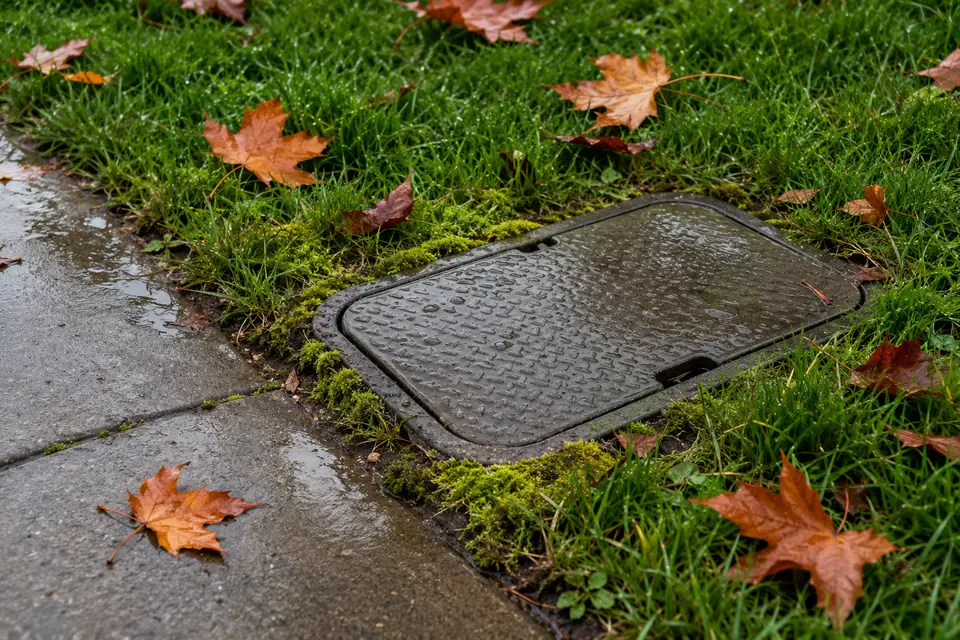
Most meters sit in a box in the ground near the street. Lift the lid carefully, since water and insects often collect inside.
- Leak dial
- A tiny wheel, star or triangle on the face that turns with even a tiny flow. This is the part to watch.
- The sweep hand
- The large hand that turns as water is used. It moves slowly with a small leak.
- The number display
- Shows total water used. Writing it down and checking again later shows use over time.
If the meter lid is heavy or stuck, use a screwdriver to lift it rather than your fingers, and never reach into the box without looking first.
Testing a water meter running when nothing is on
This test tells you whether the water meter running when nothing is on means a real leak.
- Turn everything offMake sure no taps, toilets, washer, dishwasher, ice maker or irrigation are running.
- Look at the leak indicatorIf it is turning, water is flowing through the meter right now.
- Write down the numbersNote the full reading and the time.
- Wait ten minutes without using waterThen read the meter again.
- CompareIf the reading changed or the indicator kept turning, water is escaping somewhere.
For a slow leak, try the test overnight. Read the meter last thing at night and first thing in the morning before anyone uses water.
Narrowing down where the leak is
Once you know there is a leak, two more checks split the house into parts.
- Close the house shutoffA dial that goes still puts the leak indoors. A dial that keeps spinning puts it in the buried pipe outside.
- Check the toiletsDrop some dye into every toilet tank. Any bowl that changes color without a flush belongs to a leaking toilet.
A leak in the buried line is a job for water line repair. A leak inside the house often turns out to be a toilet, a dripping faucet or a hidden pipe.
The usual suspects inside the house
- Toilets. A worn flapper is the most common silent leak in a house.
- Dripping faucets. Indoors and outdoors, a steady drip adds up.
- The water heater. A relief valve or drain valve can let water escape.
- Irrigation and outdoor lines. A cracked sprinkler line or faucet may leak unseen.
- Hidden pipes. A leak under the floor or in a wall shows up mainly on the meter.
If the toilet dye test shows a leak, the fix is usually quick. See toilet repair for what is involved.
When nothing visible explains it
If the toilets pass the dye test, no faucets drip and the meter still moves with the house valve open, the leak is likely hidden in a wall, under the floor or under the house.
In a house with a crawl space, take a look from the hatch for wet spots. Our crawl space guide explains what to look for. Otherwise, a plumber can trace the leak with leak detection.
Making the meter part of your routine
Checking the meter takes a minute and catches leaks early. A few times a year is plenty for most homes.
- Check it after any plumbing repair to confirm the fix.
- Check it after a cold snap, when pipes may have split.
- Check it if water use seems higher than usual.
- Show others in the house how to read it.
Leaks outside the house
Not every leak the meter shows is inside. Outdoor plumbing leaks are easy to miss, especially in a wet season when the ground is already soft.
- Outdoor faucets
- A split behind the wall or a worn washer can drip into the siding or the soil.
- Irrigation lines
- A cracked sprinkler pipe or valve can leak underground until the sprinklers run poorly.
- The buried water line
- A leak between the meter and the house keeps a strip of ground wet. See water line repair.
- Hoses and fittings
- A hose left under pressure or a loose fitting at the faucet can drip day and night.
Turning off the irrigation system and closing outdoor faucets during the test helps rule these out one by one.
Keeping a simple meter log
Writing down a reading now and then makes changes easy to spot. A small notebook near the door is enough.
| When | What to note | Why it helps |
|---|---|---|
| Once a month | The full meter reading and the date | Shows your normal water use over time |
| Before and after a trip | Readings with the house empty | Any change means a leak, since nobody used water |
| After a repair | The leak indicator with everything off | Confirms the repair stopped the leak |
| After a cold snap | The leak indicator with everything off | Catches pipes that split in the cold |
If the numbers jump with no change in how the house uses water, run the leak test and call if the indicator moves.
Why a small leak deserves attention
A slow leak running day and night adds up to a lot of water and a lot of damp where you cannot see it.
Small leaks also tend to grow. A pinhole widens, a seal wears further and a drip becomes a stream. Finding it while it is small keeps the repair small too.
Types of meters you may find
Dial meters
A round face with a sweep hand and a small leak indicator that spins with any flow.
Digital meters
A small screen, sometimes woken by light, with a flow symbol that appears when water is moving.
Odometer meters
A row of numbers like a mileage counter. Note the last digit, wait, and read it again.
Whatever the type, the test works the same way. Turn everything off, read the meter, then read it again after a set time.
Questions about a water meter running when nothing is on
Reading the meter
Where is my water meter?
Usually in a box in the ground near the street, close to the property line. Some homes have it near the house instead.
What does the little spinning wheel mean?
That is the leak indicator. It turns with any flow, even a tiny one. If it moves with everything off, water is escaping somewhere.
Leaks
Can an ice maker or water filter make the meter move?
Yes, while they are filling. Make sure they are not running during the test, or turn off their supply valves.
Is it the water utility's job to fix a leak?
Water lost before the meter is a matter for the utility. Past the meter, toward the house, it is usually yours to fix, and a plumber can take care of it.
How fast does a small leak add up?
Even a slow drip runs day and night, so it adds up to a lot of water over a month. The sooner it is found, the less water and damage.
Can a leak on my side of the meter affect the neighbors?
Rarely. A leak on your side of the meter affects your property. A leak on the street side belongs to the utility and they should be told.
Should I run the meter test after a plumbing repair?
Yes. With everything off, the indicator should sit still. If it still moves, there may be a second leak or the repair needs another look.
How long should I watch the meter?
Five to ten minutes shows a moderate leak. For a very slow leak, compare readings overnight when nobody is using water.
Does a running toilet show on the meter?
Yes. A toilet that leaks into the bowl is one of the most common reasons a meter moves with everything off.
Why does my meter spin fast when one tap is open?
That is normal. The indicator turns with any flow. The test only matters with everything turned off.
Can a leak make the meter run backwards?
No. If a meter seems to run backward or behaves strangely, contact the water utility, since the meter itself may need attention.
Can a leaking water heater show on the meter?
Yes. A dripping relief valve or drain valve lets water escape and the meter records it. Check the floor around the tank during the test.
Will the meter test find a leak in my drains?
No. Drains only carry water when a fixture runs, so a drain leak does not show on the meter. Drain leaks show as damp spots after water is used.
What if the indicator moves very slightly?
Even a slight movement with everything off means water is escaping. Slow leaks are often toilets or a dripping faucet, so check those first.
Is the meter test useful if my home has a well?
Homes on a private well usually have no utility meter. Instead, listen for the well pump switching on when nothing is running, which is a sign water is escaping somewhere in the system.
How do I clean a muddy meter box so I can read it?
Lift the lid, scoop out leaves and soil with a trowel and wipe the glass on the meter. Leave the pipes and valve alone, and never reach in without looking for insects first.
Can a running meter be wrong?
It is rare. A meter that moves with every tap closed is almost always measuring real water, and the utility can test the meter once you have ruled out every leak.
Does a sprinkler system affect the meter test?
Yes. Turn the controller off and make sure no zone is running. A leaking sprinkler valve is a common reason for a meter that creeps in summer.
How small a leak can the meter show?
The leak indicator moves with even a slow drip. A toilet seeping into the bowl or a faucet that barely drips will often show within a few minutes.