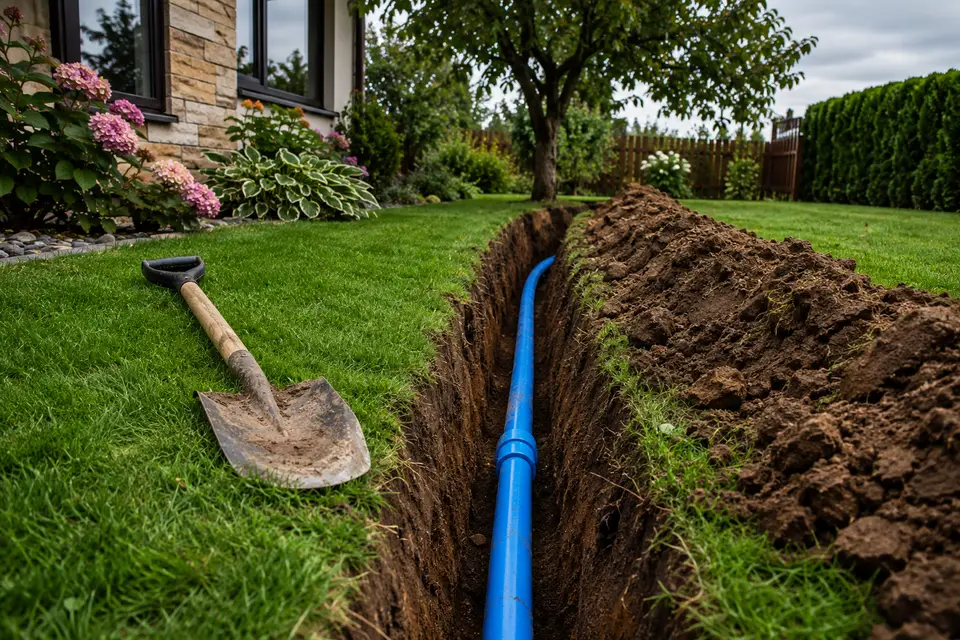
Water Line Repair in Oregon City, OR
Check the signs of a line leakSquelchy grass, feeble pressure all through the house or a meter spinning day and night often point to trouble in the buried supply pipe.
Signs the line to your house is leaking
Water line repair in Oregon City usually starts with a clue outside the house. A buried line can leak for weeks before anyone sees standing water.
- A strip of grass that stays green, soft or soggy in a dry spell.
- A wet spot or a small sinkhole along the path from the street to the house.
- Pressure falling at every tap all at once.
- A water meter that keeps turning when nothing in the house is running.
- Hissing or running water sounds near where the line enters the house.
- Muddy or cloudy water after the line has been off and back on.
In a wet season, a soggy lawn is easy to blame on the rain. The difference is that a line leak keeps the same spot wet after the rest of the yard has started to dry.

Where the line runs and which part is yours
Your water travels from the main in the street, through the meter, then along a buried service line into the house. Most homes have a shutoff at the meter and a second one where the line comes inside.
- Street to meter
- In most places this part belongs to the water utility. If the leak is on this side, the utility usually handles it.
- Meter to house
- This buried line usually belongs to the homeowner, and it is the part a plumber repairs.
- Inside the house
- From the house shutoff onward, every pipe and fixture is part of your home plumbing.
If you are unsure where the line of responsibility sits for your address, the water utility can confirm it. The plumber can also tell you which side of the meter the leak is on.
Why buried water lines fail
A water line sits underground for decades, out of sight. These are the most common reasons one starts to leak.
- Age and corrosion
- Older galvanized lines rust from the inside, and copper can thin out where the soil or water wears on it.
- Tree roots
- Roots grow toward moisture and can crush or crack a line, especially at a joint that already seeps a little.
- Shifting ground
- Soil that swells in long wet seasons and settles in dry ones moves the line and stresses its fittings.
- Shallow sections
- A line buried too shallow can freeze in a hard cold snap or be damaged by digging and heavy vehicles.
- Old repairs and fittings
- A patch or fitting from years ago can loosen as the ground moves around it.
- High water pressure
- Pressure that runs too high strains the whole line, especially old fittings near the house.
A simple test to find out if it is the line
This test uses your two shutoff valves to tell whether water is escaping outside or inside the house.
- Close every tap and applianceMake sure no toilet is refilling, no irrigation is on and the washer and dishwasher are idle.
- Watch the meter for five minutesOpen the meter box lid and look at the small leak indicator dial. Note whether it moves.
- Close the house shutoffFind the valve where the line enters the house and close it fully.
- Watch the meter againStill turning with the house valve shut? Then the water is escaping outdoors, somewhere along the pipe from meter to foundation.
If the dial stops once the house valve is closed, the leak is inside the house instead. In that case our leak detection page is the better place to start.
How a water line is repaired
With water line repair in Oregon City, the fix depends on where the leak sits and how healthy the remaining pipe looks.
A spot repair
When the line is in good shape apart from one leak, the plumber digs at that point, cuts out the damage and joins in a new piece.
A longer section
When one part of the line is worn or damaged by roots, replacing that whole section avoids a string of small repairs.
A new line
When the line is old galvanized pipe or leaking in several places, a new line from the meter to the house is often the lasting fix.
Whatever the repair, the plumber tests the line under pressure before the trench is closed, then checks the pressure inside the house.
Looking after the yard during the work
Repairing a buried line means some digging. The plumber plans the work to disturb as little of the yard as possible.
- Ask where the digging will be before it starts, so you can move pots, furniture or anything fragile.
- Tell the plumber about sprinkler lines, buried cables you know of or a pet that uses the yard.
- Underground utilities are marked before any digging, which is a standard safety step.
- Expect the trench to be backfilled, though lawn and plantings may need a little time to recover.
If you have plans for the yard, such as a new path or a patio, mention them. It may change where the new line is best placed.
Low pressure everywhere is not always the line
Weak water pressure at every tap can come from a few different places. Comparing the signs helps narrow it down before anyone digs.
Points to the water line
- Pressure dropped suddenly
- A wet or soft patch in the yard
- The meter moves with the house valve closed
- Hissing near where the line enters
Points somewhere else
- Pressure faded slowly over years
- Only hot water is weak
- Only one fixture is weak
- The pressure regulator is old or noisy
Slowly fading pressure in an older house often comes from rusted galvanized pipe inside the walls. Weak hot water alone points toward the water heater. The plumber checks each possibility.
Water line leaks in a wet climate
Long rainy seasons make a buried leak harder to notice, because a soggy lawn looks normal for much of the year. The clues show up best in the drier months.
- A patch of grass that stays green and soft into late summer.
- Moss spreading along one straight line across the lawn.
- A meter box that fills with clear water even after a dry week.
- Usage on your water account climbing while your habits stay the same.
If you notice one of these in summer, run the meter test on this page. Catching the leak before the next wet season keeps the soil around the line from washing out.
Questions about water line repair in Oregon City
Finding the leak
Can a plumber find a water line leak without digging up the whole yard?
Yes. The plumber uses the meter, the route of the line, the wet spots and listening for running water to narrow the leak down to a small area before any digging starts.
Is a soggy lawn always a water line leak?
No. Poor drainage, a downspout or a broken irrigation pipe can soak a lawn too. A line leak keeps the same spot wet in dry weather and usually shows on the meter.
How deep is my water line buried?
It varies with the age of the house and how it was built. The plumber finds the line and its depth before planning the repair.
The repair
Will my water be off during the repair?
Yes, for part of the work. The plumber will tell you when and roughly how long, so you can fill a few jugs and plan around it.
Should I replace the whole line if only one spot leaks?
It is not always needed. A sound line with one leak can be spot repaired. An old galvanized line with several weak points is usually better replaced. The plumber shows you the condition so you can decide.
What material is used for a new water line?
The plumber chooses a material suited to buried service lines and the soil around your home, and explains the choice before starting.
After the work
Why is my water cloudy after the line was repaired?
Air and a little sediment get into the pipes during the work. Run the cold taps for a few minutes and the water clears.
How do I know the repair holds?
The plumber tests the line under pressure before closing the trench. Afterward the meter should sit still when nothing in the house is running.
Can tree roots break a water line?
They can. Roots grow toward the moisture around a seeping joint and can crack or crush the pipe over time. A new section can run around large trees when needed.
Who marks underground utilities before digging?
Buried gas, power and cable lines are located and marked before any digging starts. It is a standard safety step for every buried line repair.
Will the repair change my water pressure?
If the old line was leaking or narrowed by rust, pressure often improves once the repair is done. The plumber checks the pressure inside the house before leaving.