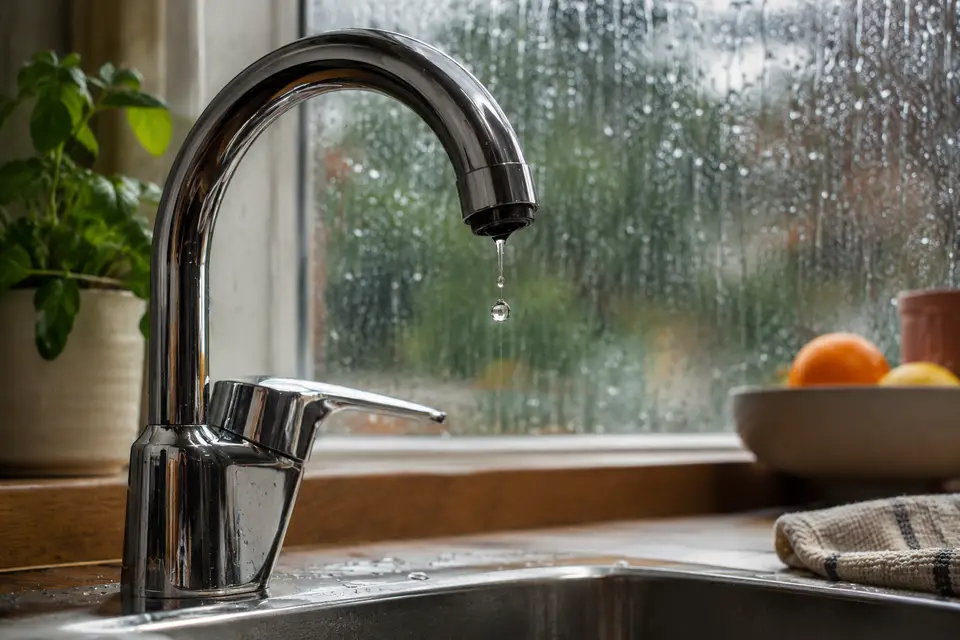
Faucet Repair in Oregon City, OR
Find what is wearing outA faucet that drips all night, a handle that wobbles or a cabinet floor that stays damp is usually one worn part away from fixed.
Why faucets drip and sinks leak
Faucet repair in Oregon City usually means replacing a small part that wears with every use. These are the usual culprits.
- Washers and O rings
- Older compression faucets seal with rubber washers that harden and crack over time.
- Cartridges
- Single handle faucets use a cartridge that wears out and lets water past.
- Valve seats
- The metal seat inside the faucet can corrode and stop a washer sealing properly.
- Supply hoses
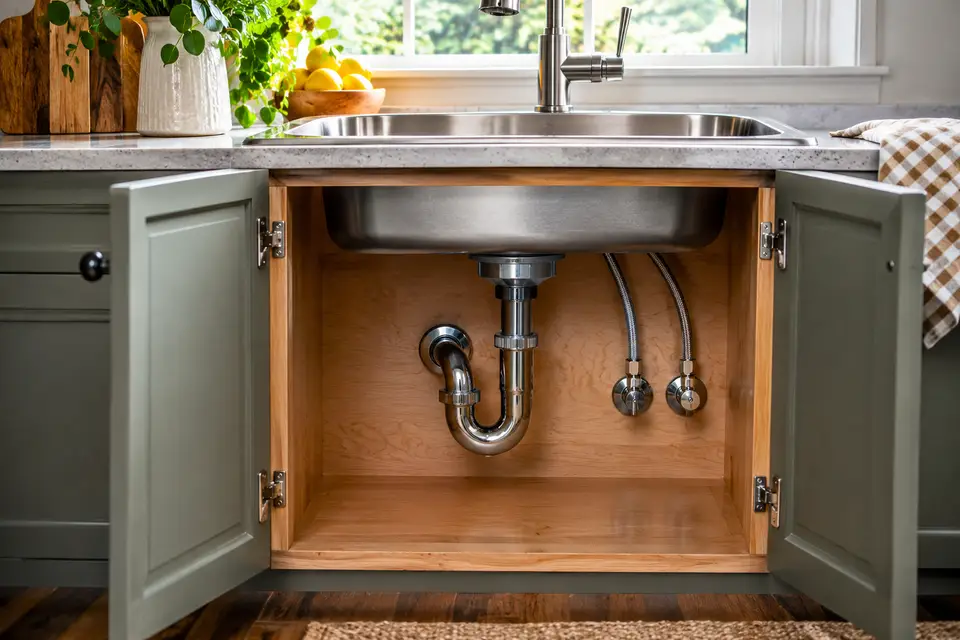
- Braided hoses beneath the basin work loose or split and drip into the cupboard.
- Drain traps and seals
- The curved trap and the seal around the sink drain can seep slowly.
Faucet drip or sink leak?
A drip from the spout and water in the cabinet are two different repairs. Comparing the signs tells you which you have.
A dripping faucet
- Water falls from the spout with the handle off
- The drip may speed up after use
- The handle may feel stiff or loose
- Fixed inside the faucet itself
A leaking sink
- The cabinet floor stays damp
- A musty smell under the sink
- Swollen or stained cabinet panels
- Usually the trap, drain seal or supply lines
If water appears both ways, mention it when you call. The plumber can check the faucet and everything under the sink in one visit.
Weak flow from one faucet
If one faucet runs weakly while others are fine, the cause is usually close to that faucet rather than in the main line.
- A clogged aerator. Mineral buildup and grit collect in the screen at the tip of the spout. Unscrewing and rinsing it often fixes the flow.
- A worn cartridge. A cartridge that is breaking down can restrict flow as well as drip.
- A partly closed shutoff. The small valves under the sink can be bumped partly closed.
- A kinked supply line. Items stored under the sink can pinch a flexible line.
Poor flow at every tap points elsewhere, often to the supply line. The water line repair page deals with that case.
How the plumber repairs a faucet
Replacing worn parts
Washers, O rings, cartridges and seats are replaced with parts that match your faucet.
Tightening loose handles and spouts
A wobbly handle or spout is tightened and resealed so it stops leaking at the base.
New shutoffs and supply lines
Stuck or seeping shutoff valves and old supply lines are swapped for new ones.
Resealing the drain
A leaking drain or trap is resealed or replaced so the cabinet stays dry.
For a very old faucet, or one whose parts have been discontinued, you will hear honestly whether fixing it can work or a replacement is wiser.
Protecting the cabinet under the sink
Sink cabinets often hide slow leaks for months, especially when they are packed with cleaning supplies. A damp cabinet floor swells, stains and can grow mold in a damp climate.
- Look under each sink every few months with a flashlight.
- Keep stored items away from supply lines and the trap.
- Feel the cabinet floor for soft spots or damp patches.
- Run the faucet for a minute and watch the drain connections.
If you have a garbage disposal, leaks under the kitchen sink may come from it instead. See garbage disposal repair for those.
Bathroom sinks hide leaks too, especially around the pop up drain and the overflow. A slow seep there can stain the vanity floor long before you notice water.
Outdoor faucets after a cold snap
Real freezes are rare in this part of Oregon, yet when one hits, garden faucets tend to crack first. Often nobody notices until the tap is opened again in spring.
If an outdoor faucet drips, sprays inside the wall or leaves a wet patch on the siding, close its inside shutoff if there is one and call. A split inside the wall is closer to a burst pipe repair than a faucet fix.
Faucet types and what wears out in each
The way your faucet works inside decides which part wears out. If you are not sure which type you have, the plumber can tell at a glance.
| Faucet type | How you use it | Parts that tire first |
|---|---|---|
| Compression | Two handles you screw down to close | Washers and the seat they press on |
| Cartridge | One or two handles with a smooth action | The cartridge and its O rings |
| Ball | One handle on a rounded cap that moves in all directions | Seals, springs and the ball |
| Ceramic disc | One lever over a wide cylinder | The seals around the discs, rarely the discs |
Older homes often still have compression faucets, which drip as their washers age. Newer faucets drip less often, but their cartridges can fail suddenly.
Kitchen and bathroom sinks need different care
Kitchen sinks
- Pull down sprayer hoses that wear and leak
- Heavy daily use that wears cartridges sooner
- Dishwasher and disposal connections below
- Grease building up in the drain
Bathroom sinks
- Pop up stoppers that stick or leak
- Hair and toothpaste in the drain
- Small supply lines that can kink
- Mineral spots on the aerator
Telling us which sink is affected, and whether the trouble is in the faucet or below it, helps the plumber bring the right parts.
Questions about faucet repair in Oregon City
Drips and leaks
Is a dripping faucet worth repairing?
Yes. A steady drip wastes water every day and usually means a worn part that is easy to replace.
Why does the drip start right after I turn it off?
A worn washer or cartridge may seal at first, then let water by as it settles. It is still a sign the part needs replacing.
What makes the sink cabinet floor wet?
The most common causes are a loose supply line, a seeping trap or a failed drain seal. The plumber finds which one by running water and watching each connection.
Flow and handles
Why is my faucet pressure low?
One weak tap usually comes down to its aerator or cartridge. Weak flow everywhere hints at the supply into the house.
Why is my faucet handle hard to turn?
Mineral buildup or a worn cartridge can make a handle stiff. Replacing or cleaning the cartridge usually fixes it.
Repair or replace
Can any faucet be repaired?
Most, provided parts are still around. A cracked body or a discontinued model is the point to choose a new one.
Should I turn off the water under the sink while I wait?
If the faucet is dripping heavily or the cabinet is getting wet, yes. Close the small valves under the sink and use another sink until the repair.
Can the plumber install a new faucet I bought?
Mention it when you call. The plumber can check that it suits your sink and connections.
How long does a faucet repair take?
Replacing a washer or cartridge usually takes under an hour once the right part is on hand.
Why does water come out around the faucet handle?
Worn O rings or a loose packing nut let water escape around the handle. Replacing the seals usually stops it.
Why does my faucet spit or spray sideways?
Mineral grit is usually caught in the aerator. Unscrew the tip, rinse the screen and put it back. If it keeps happening, a cartridge or supply line may be shedding debris.
Can a loose faucet be tightened from above?
A loose handle often just needs its screw tightened. A faucet body that rocks on the sink is fastened from underneath, which is easier with the right tool.
What causes a squeal when I turn the water on?
A worn washer or cartridge that vibrates as water passes is the usual cause. Replacing the part normally stops it.